
How to Start Practising Witchcraft
Begin your journey into witchcraft with simple
Free shipping for orders over £75
A free one-of-a-kind collectable gift with every purchase above £25
If you’re wondering how to start practising witchcraft, you’re in exactly the right place. There’s a quiet call that some of us feel, a pull towards the old ways, a longing for deeper connection with the world around us. If you’re feeling that call, know this: it’s not by accident. You’re remembering something ancient, something woven into your bones long before you were born.
And for some of us, it’s simpler than that. Witchcraft catches our eye, and our curiosity does the rest.
However the craft found you, if you’re wondering how to start practising witchcraft, you’re in the right place. This guide is written for baby witches and curious beginners alike — no experience, no expensive tools, and no prior knowledge required. Just you, an open mind, and the willingness to begin.
Before we dive in, it helps to understand what witchcraft is and isn’t.
Witchcraft is a practice, not a religion. It’s the intentional use of energy, ritual, and symbolism to create meaningful change, within yourself and the world around you. Some witches are Wiccan. Some are pagan. Some follow no tradition at all and simply practise in the way that feels true to them.
There is no single right way to be a witch.
Witchcraft isn’t about casting curses or following a rulebook. It’s about intention, awareness, and connection, with yourself, with nature, and with the rhythms of the world. At its heart, it’s a deeply personal, deeply human practice.
Witchcraft is as vast and varied as the people who practise it. For some, it’s about working with the elements and the turning of the seasons. For others, it’s about crafting spells, working with herbs and crystals, honouring the moon, and building a daily ritual practice.
There’s no wrong answer.
A good place to start is to sit quietly and ask yourself: What am I seeking? Connection? Healing? Strength? A sense of wonder? A way to mark the seasons?
Your path will unfold from there, as naturally as a seed growing towards the sun. You don’t need to define it all at once. Witchcraft, like any deep practice, reveals itself gradually, and that unfolding is part of the magic.
You don’t need a grand altar to begin practising witchcraft. A windowsill, a small shelf, or a quiet corner of a table is more than enough.
Gather a few items that feel meaningful to you: a candle, a crystal, a flower from the garden, a handful of dried herbs, a feather you found on a walk. These don’t need to be expensive or sourced from a specialist shop — though as your practice grows, you may find yourself drawn to handmade pieces that carry real intention.
Place your items where you can see them each morning. Light your candle. Take a breath. That’s it. That is witchcraft.
Your sacred space is a reminder that the magical and the everyday are not separate things — they are one and the same.
One of the most important things we can tell you about how to start practising witchcraft is this: simple is powerful.
You don’t need elaborate ceremonies or rare ingredients. The most meaningful rituals are often the quietest ones.
Try these to begin:
These small, intentional acts are how most witches begin. Over time, they become second nature — a way of moving through the world with awareness, presence, and wonder.
Many witches work closely with the four classical elements — Earth, Air, Fire, and Water. Understanding them is one of the most foundational parts of beginning a witchcraft practice.
Earth grounds and stabilises. It’s the soil you walk on, the crystals you hold, the herbs you grow and gather. Work with Earth when you need stability, abundance, or a sense of rootedness.
Air carries thought and intention. It’s the wind in the trees, the smoke from your incense, the words of a spell spoken aloud. Work with Air when you need clarity, communication, or new beginnings.
Fire transforms. It’s the candle flame, the burning of old habits, the warmth of the sun on your face. Work with Fire when you need courage, change, or passion.
Water flows and heals. It’s the rain, the river, a bath drawn with intention, a glass of water left on the windowsill under the full moon. Work with Water when you need healing, intuition, or emotional release.
You don’t need to study these in depth to begin. Simply noticing them — really noticing them, in your everyday life — is enough to start building a relationship with each one.
A Book of Shadows is a personal journal for your witchcraft practice. It’s part spell book, part diary, part reference guide, and it’s entirely yours.
A simple notebook is perfect to start with. Use it to record:
Over time, your Book of Shadows becomes one of your most treasured possessions — a living record of your growing practice. There’s no right or wrong way to keep one. Some witches write in theirs daily. Others dip in and out. Some fill them with pressed flowers and sketched symbols. Others keep it simple and sparse.
It’s yours. Make it feel like you.
This path is yours alone.
Books, teachers, communities, and traditions can offer wonderful guidance, and we’d always encourage you to explore widely. But ultimately, your inner knowing is your most powerful tool as a witch. No teacher, no tradition, and no rulebook knows your path better than you do.
If a ritual feels right, trust it. If a practice doesn’t sit well with you, even if it’s widely used or recommended, leave it. If a symbol, a herb, a candle colour, or a phase of the moon calls to you strongly, pay attention. Your instincts are not random. They are the earliest form of your magical voice.
You are wiser than you realise.
Honestly? Very few, especially at the start.
The most used tools in a beginner witch’s practice tend to be: a candle, a journal, and an open heart. Everything else: crystals, herbs, incense, tarot cards, cauldrons, ritual kits, can be added gradually, as and when they feel right.
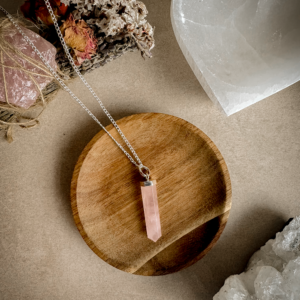
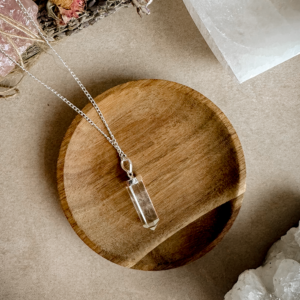
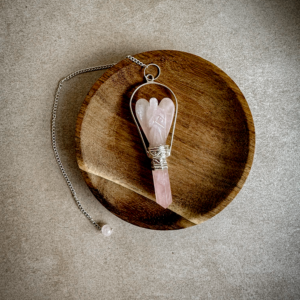
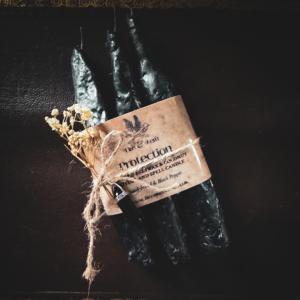
If you do want to invest in a few meaningful pieces, we’d suggest starting with:
Choose pieces that feel beautiful and intentional to you. In witchcraft, the energy you bring to your tools matters as much as the tools themselves.
Do I need to be Wiccan to practise witchcraft? Not at all. Wicca is one path within the broader world of witchcraft, but it’s far from the only one. Many witches have no religious affiliation at all. Witchcraft is a practice; you can make it entirely your own.
Do I need to be initiated or taught by someone? No. Some traditions do involve initiation, but solitary witchcraft, practised alone, self-taught, at your own pace, is just as valid and just as powerful.
Is witchcraft dangerous? Witchcraft, as practised by the vast majority of people, is simply an intentional, mindful engagement with the world. It is not inherently dangerous. As with any spiritual practice, approach it with respect, genuine intention, and common sense.
What’s the best way to learn more? Read widely, explore different traditions, spend time in nature, and, most importantly — practise. There is no substitute for showing up, lighting your candle, and simply beginning.
Do I need to tell anyone I’m a witch? Absolutely not. Your practice is yours. Share it as much or as little as feels right to you.
Witchcraft is not about perfection. It’s not about memorising every herb or owning every tool. It’s not about following a strict set of rules.
It’s about connection, with yourself, with the earth, with the unseen energies that move through everything around us.
It’s about coming home to yourself, again and again.
So the next time you wonder how to start practising witchcraft, remember: the moment you felt that quiet pull, the moment you asked the question- you had already begun.
Take your time. Breathe deep. Begin.
At Fire & Fern, we make handmade ritual candles, spell kits, incense holders, and spiritual supplies — each one crafted by hand using natural botanicals, herbs, and crystals, many grown on wild Cumbrian land. If you’re just starting out, explore our beginner ritual kits, made for exactly this moment.
Begin your journey into witchcraft with simple
Spells and rituals- are they the same
Discover simple witch rituals to begin your
A hedge witch walks the boundary between
Sign up to receive offers and new products before anyone else.